
Mole removal with a cold laser
€219 + €25 outpatient clinic fee
incl. examination and removal of 1–3 moles; additional moles €50 each
We remove moles since 2007
A gentle way to remove moles – no pain and scars
No downtime – return to daily life immediately
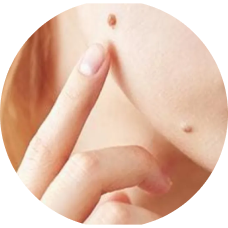
Cold laser mole removal does not leave scars
Cold laser is the gentlest method for removing moles. This technique does not require cutting the skin or applying stitches. The skin heals quickly, and the procedure leaves no noticeable scars or marks. Mole removal is almost painless, however, we also use local anesthesia to ensure our patients feel no discomfort.
Before and after
The skin heals after mole removal just like it would after a small superficial wound.
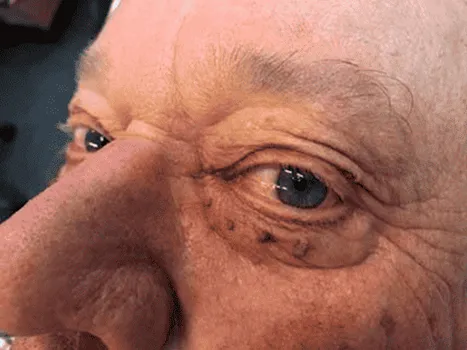

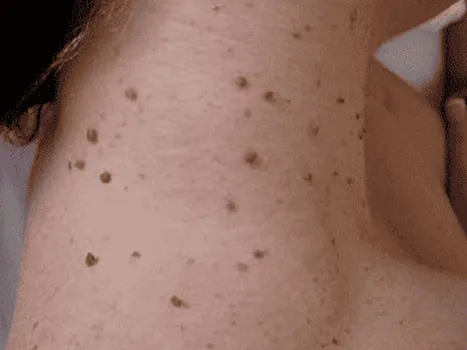

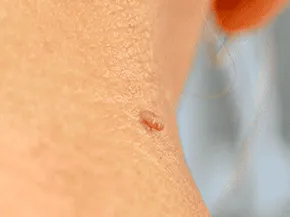

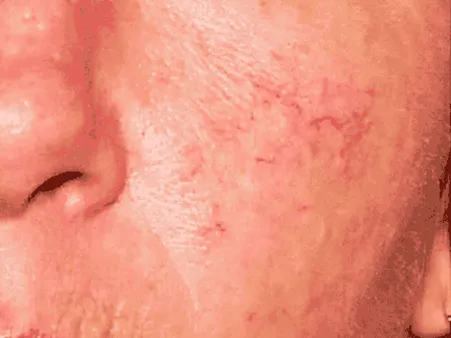

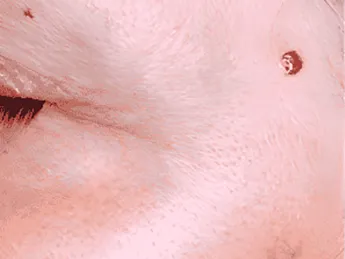

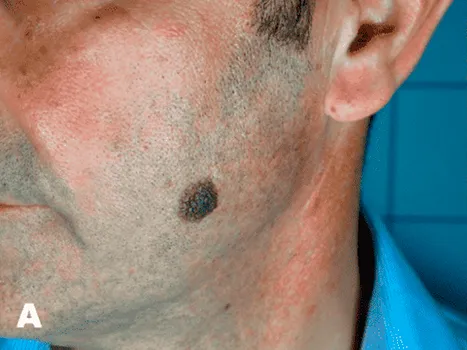

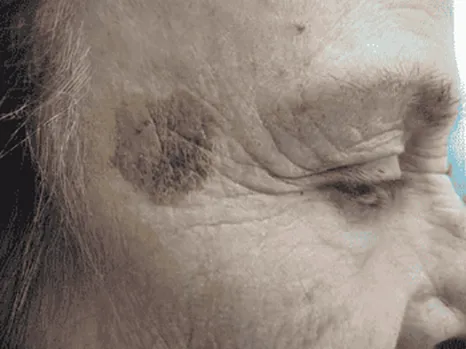
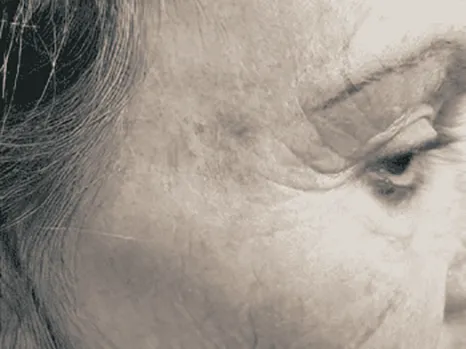
Mole removal can be performed on the face and other sensitive areas
With this gentle method, moles can be removed regardless of their location - on the face, on the eyelids, on the nose and nostrils, on the neck, limbs and intimate areas. We remove many different types of moles, such as papillomas, spider veins, keratomas, warts and other moles.
Assessment and removal of 1–3 moles: €219
The procedure takes 20 minutes
The doctor can remove more than 3 moles during the same visit; each additional mole costs €50
Papillomas and angiomas are removed by treatment areas: 1–3 areas assessed by the doctor for €219
If the patient does not have a Kela card, the price without Kela reimbursement is €227
An outpatient clinic fee of €25 will be added to the appointment cost
Book nowMedfin Medical Center was established in 2004

100% Finnish company
Our roots are grounded in Finnish values. We offer high-quality, reliable, and affordable medical care.

Over 60 000 clients
Our experienced and professional team has helped tens of thousands of clients over the years.

Approved by Valvira and Kela
Our services are certified – receive care safely, conveniently, and quickly, either at the clinic or remotely.



We remove over 4 000 moles each year
Our clients' experience
After six months, reddish flat scars remained on the site of the moles, which can be hidden with makeup (unlike the previous moles), so I am satisfied with the result. Healing greatly depends on your skin, mine is quite light and easily forms scars, on the other hand, they will continue to fade over the next couple of years.- Maria Ruohonen
The service was friendly and professional. The mole removal procedure was completely painless and fast. The first day after the procedure has passed, there is no pain, no liquid or blood is being discharged from the mole removal site. I am very satisfied.- Liisa Mattila
The procedure was painless, I believe the price was affordable, and the doctor and other staff were very friendly. There are no scars left. I still have some moles, so at the first opportunity, I will definitely go there again.- Heidi Helin
Friendly and professional service. Mole removal went quickly and well. I recommend the medical center.- Taisto Helle
Assessment and removal of 1–3 moles: €219
The procedure takes 20 minutes
The doctor can remove more than 3 moles during the same visit; each additional mole costs €50
Papillomas and angiomas are removed by treatment areas: 1–3 areas assessed by the doctor for €219
If the patient does not have a Kela card, the price without Kela reimbursement is €227
An outpatient clinic fee of €25 will be added to the appointment cost
Book nowFrequently Asked Questions
The procedure usually takes about 20 minutes and includes a mole examination, local anesthesia, the mole removal itself, and instructions for aftercare. Radiofrequency surgery (“cold laser”) uses high-frequency radio waves (1.5–6.0 MHz) to remove a mole. The “cold laser” device resembles a small loop or pin used by the doctor and produces minimal heat. As a result, surrounding tissue damage is minimal, healing is fast, and the risk of visible scars or keloid formation is significantly reduced. Radio waves increase intracellular pressure to the point where the cell breaks down from the inside. This process is known as cellular vaporization.
Despite the low risk of injury, the procedure is performed under local anesthesia. The patient typically feels only the injection. After the procedure, pain medication is usually not required.
This procedure does not require any special preparation. If you are taking omega-3 supplements or other medications that may reduce blood clotting, please stop taking them three days before the procedure to minimize the risk of bruising. Please also note that you can take a shower 24 hours after the procedure.
Mole removal takes 20 minutes.
In a 20-minute appointment, a doctor typically removes 1–3 moles. Based on the doctor’s assessment, more than three moles may be removed during the same visit. Papillomas and angiomas are removed by zones, during one appointment, 1–3 such zones can be treated.
A 20-minute doctor’s appointment, which is sufficient for removing one to three moles, costs €219. Removal of a fourth mole and any additional moles during the same visit costs €50 per mole. If a large number of small moles are removed from one area (as is common with papillomas and angiomas), removal of 1–3 zones costs €219. If the doctor determines that more than three zones or more than three individual moles can be removed during the same appointment, each additional mole or zone after the third costs €50. The prices do not include the outpatient clinic fee (poliklinikkamaksu).
Healing is similar to that of a superficial scratch. Within 7–10 days, a pinkish spot may remain at the site of the mole, as the skin goes through several stages of regeneration before returning to its normal color. The complete process of restoring the skin’s natural color typically takes 3 to 6 months.
Sometimes, after full recovery and healing, lighter spots may remain on the skin (more often on the body, very rarely on the face). If the pigment has penetrated deep into the skin around and under the mole, then after its removal, a small depression may remain on the skin.
If you do not have any conditions that impair local immunity and are not taking medications that affect wound healing, post-procedure skin care is usually simple. During the first 24 hours, keep the antibacterial cream applied by the doctor under the bandage. After this period, a plaster is generally no longer needed, except when the mole was removed from an area exposed to friction from clothing. In such cases, it is recommended to reapply a bandage after showering to protect the area and prevent the scab from being disturbed. In all cases, the treated area should be gently cared for using Bepanthen anti-inflammatory cream for 3–5 days. Special attention should be given to sun protection for the first 1.5–2 months, including during winter. Use a high-protection sunscreen, as sun exposure may damage the healing skin and cause pigmentation changes. If you have a condition that weakens immunity, your doctor may prescribe additional medication to reduce the risk of infection.
As soon as the skin surface becomes completely dry, usually two to three days after the procedure.
No. Mole removal itself does not cause malignancy. Changes in a mole are more commonly associated with repeated irritation or injury, such as constant friction from clothing or repeated trauma during activities like shaving.
Moles are removed for medical and aesthetic reasons. Some moles may become malignant, particularly those located in areas exposed to constant friction or repeated injury. Special attention should be paid to moles that appear suspicious, for example, those with irregular borders or uneven pigmentation, or moles that change in size, itch, cause pain, or bleed. Such moles should be examined by a doctor without delay.
We serve clients of all ages. Moles removal for children can be performed exclusively for medical reasons. Elderly people are strongly advised to carefully follow the doctor's instructions for skin care after the procedure.
We remove moles regardless of their location, on the face (including the eyelids, nose, and nostrils), neck, torso, limbs, and intimate areas.
Doctors usually remove moles with a scalpel, laser, liquid nitrogen, and the radiofrequency method, also called the "cold laser."
The Radiofrequency ablation method (also called "cold laser") is the least traumatic and ensures rapid healing with excellent aesthetic results. It almost never leaves marks or scars.In addition, unlike conventional laser treatment, it allows tissue from protruding moles to be collected for biopsy.
The only contraindication to this method is the patient's use of a cardiac pacemaker.
All mole removal methods without exception have the same side effects and risks. For example, the appearance of a bruise when a local anesthesia is injected, sometimes a hypertrophic (hyperplastic) scar or keloid scar can develop. It has been proven that with the "cold laser" method these risks are minimal. The "cold laser" traumatizes the surrounding tissues less than other methods.
"Since the invention of this method in 1983, it has been approved by international associations of surgeons and dermatologists. Today, the method is used worldwide - in Europe, Asia, America, Australia and New Zealand.
Assessment and removal of 1–3 moles: €219
The procedure takes 20 minutes
The doctor can remove more than 3 moles during the same visit; each additional mole costs €50
Papillomas and angiomas are removed by treatment areas: 1–3 areas assessed by the doctor for €219
If the patient does not have a Kela card, the price without Kela reimbursement is €227
An outpatient clinic fee of €25 will be added to the appointment cost
Book now